Storage for Wholesalers and Retailers in Saudi Arabia: A 2026 Playbook
Storage for wholesalers and retailers is where profit is either protected or quietly eroded. If your stock sits in cramped back rooms, overflows into aisles, or spoils in the summer heat, you are paying a hidden tax on every sale. In 2026, as Saudi Arabia’s retail and e-commerce sectors grow rapidly under Vision 2030, getting your warehousing right has become a core business skill rather than a back-office chore.
This playbook explains how wholesalers and retailers can store inventory smarter, choose between storage models, and use a professional partner to scale without buying a building.
Why Storage Is a Growth Lever, Not a Cost Center
Retailers often view warehousing as pure overhead. In reality, the right storage setup speeds up fulfilment, reduces stockouts, and lets you buy in bulk at better prices. That is a growth lever hiding in plain sight.
Bulk purchasing only works if you have somewhere clean, secure, and organized to keep the goods. A dedicated solution such as Storage for Wholesalers and Retailers gives you scalable space, security, and inventory handling so you can negotiate volume discounts with confidence.
The cost of running out of room
When shelves overflow, staff waste time shuffling boxes, orders get delayed, and damaged stock piles up. Renting flexible external space almost always beats cramming inventory into retail floor area that should be generating sales.
What Type of Storage Do Retailers Actually Need?
The answer depends on what you sell. Dry goods, packaged food, textiles, electronics, and cosmetics all have different tolerances for heat and humidity. Matching product to environment is the foundation of loss prevention.
According to the GS1 global standards body, consistent labeling and barcoding across the supply chain dramatically reduce picking errors and improve traceability, which matters even more once you scale into multiple channels.
| Product Category | Recommended Storage | Key Consideration |
|---|---|---|
| Packaged food & beverages | Dry, ambient, pest-controlled | Shelf-life and FIFO rotation |
| Textiles & apparel | Dry, low-humidity | Mold and mildew prevention |
| Electronics & accessories | Climate-stable, secure | Theft risk and moisture |
| Cosmetics & personal care | Temperature-stable | Heat-sensitive formulas |
| General merchandise | Standard ambient racking | Efficient space use |
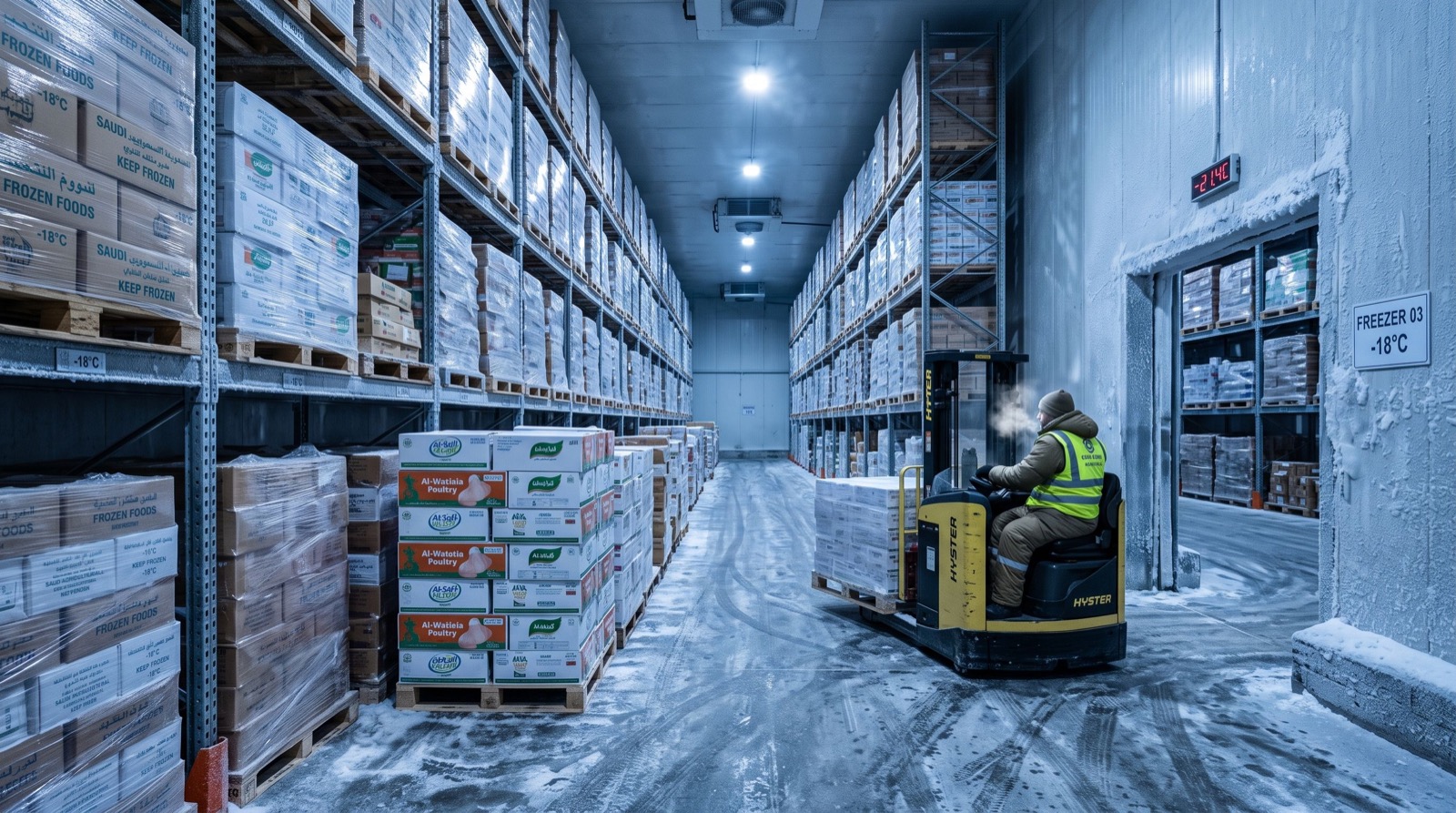
For goods that need a stable, moderate climate but not refrigeration, an option like Ambient Storage In Riyadh protects stock from extreme heat and dust while keeping costs down compared with fully climate-controlled space.
How to Organize Wholesale Inventory Efficiently
Wholesale volumes reward discipline. A well-run warehouse turns stock faster and ties up less cash. Here is a framework that works for growing distributors:
- Slot by velocity. Place best-sellers near dispatch and slow movers deeper in the racks.
- Standardize pallet and box sizes. Uniform units make racking and counting far simpler.
- Adopt FIFO for perishables. First in, first out keeps expiry dates under control.
- Barcode everything. Scanning beats manual counts and slashes picking errors.
- Run cycle counts. Small, frequent counts catch shrinkage before it becomes a write-off.
An insight from high-volume operators
Track your “dead stock” ratio monthly, the percentage of inventory that has not moved in 90 days. Distributors who watch this number aggressively free up cash and shelf space by discounting slow movers early instead of letting them clog the warehouse. It is one of the fastest ways to improve cash flow without raising prices.
Self-Storage vs Managed Warehousing for Retailers
Retailers face a choice between simple self-storage units and fully managed warehousing. Both have their place, and the right pick depends on order volume and staffing.
- Self-storage: Great for seasonal overflow, pop-up stock, or a lean startup.
- Managed warehousing: Ideal for firms needing receiving, pick-and-pack, and dispatch handled for them.
- Third-party logistics (3PL): A step further, adding order routing and returns management.
When you evaluate providers, prioritize local expertise and clear terms. Partnering with trusted professionals who understand retail supply chains means fewer surprises and faster onboarding than a generic, one-size-fits-all warehouse.
Is Outsourced Storage Worth It for Retailers in 2026?
For most wholesalers and multi-channel retailers, outsourcing storage is a clear win in 2026. It converts a heavy fixed cost into a flexible one, lets you scale up for peak seasons like Ramadan and back-to-school, and removes the burden of managing a warehouse team.
The savings on racking, insurance, security, and labor often outweigh the monthly fee. Just as importantly, it frees your energy to focus on buying well and selling more.
Seasonal Demand and Storage Planning in Saudi Arabia
Retail demand in the Kingdom is highly seasonal, and your storage strategy should reflect that. Ramadan and Eid bring huge spikes in food, gifts, and apparel, while the summer travel season and back-to-school period create their own surges.
Smart wholesalers plan storage capacity around these peaks rather than the annual average. Locking in flexible external space three to four months ahead of a major season prevents the last-minute scramble that inflates costs.
Consider building a simple demand calendar that maps each product category to its peak months. This lets you pre-position stock, negotiate better supplier terms, and avoid paying premium rush rates for warehousing during the busiest weeks of the year.
Balancing safety stock with cash flow
Holding too much safety stock ties up cash; holding too little risks stockouts during a rush. The sweet spot depends on your lead times and how reliable your suppliers are. Flexible storage lets you tune this balance month by month instead of committing to a fixed footprint.
Frequently Asked Questions
What is the best storage solution for a growing retail business?
Growing retailers usually benefit most from flexible external warehousing that scales with demand. It lets you buy in bulk, handle seasonal peaks, and keep your retail floor free for selling rather than storing stock.
How can wholesalers reduce storage costs?
Reduce costs by slotting inventory by velocity, standardizing packaging, cutting dead stock early, and choosing ambient over climate-controlled space where products allow. Outsourcing also turns fixed warehouse costs into flexible, usage-based fees.
What is the difference between self-storage and managed warehousing?
Self-storage gives you a private unit you manage yourself, ideal for overflow. Managed warehousing adds receiving, pick-and-pack, and dispatch handled by professionals, which suits higher-volume retailers who want fulfilment taken care of.
Do I need climate control for retail inventory?
Only for heat- or humidity-sensitive goods like cosmetics and some electronics. Most packaged goods, textiles, and general merchandise store well in clean, pest-controlled ambient space, which costs less than climate control.
Conclusion
In 2026, storage for wholesalers and retailers is a strategic decision that shapes margins, fulfilment speed, and your ability to buy in bulk. Match products to the right environment, organize by velocity, and lean on a professional partner to scale flexibly. Ready to turn warehousing from a headache into a growth engine? Contact a trusted Saudi storage specialist today for a plan tailored to your inventory and sales channels.